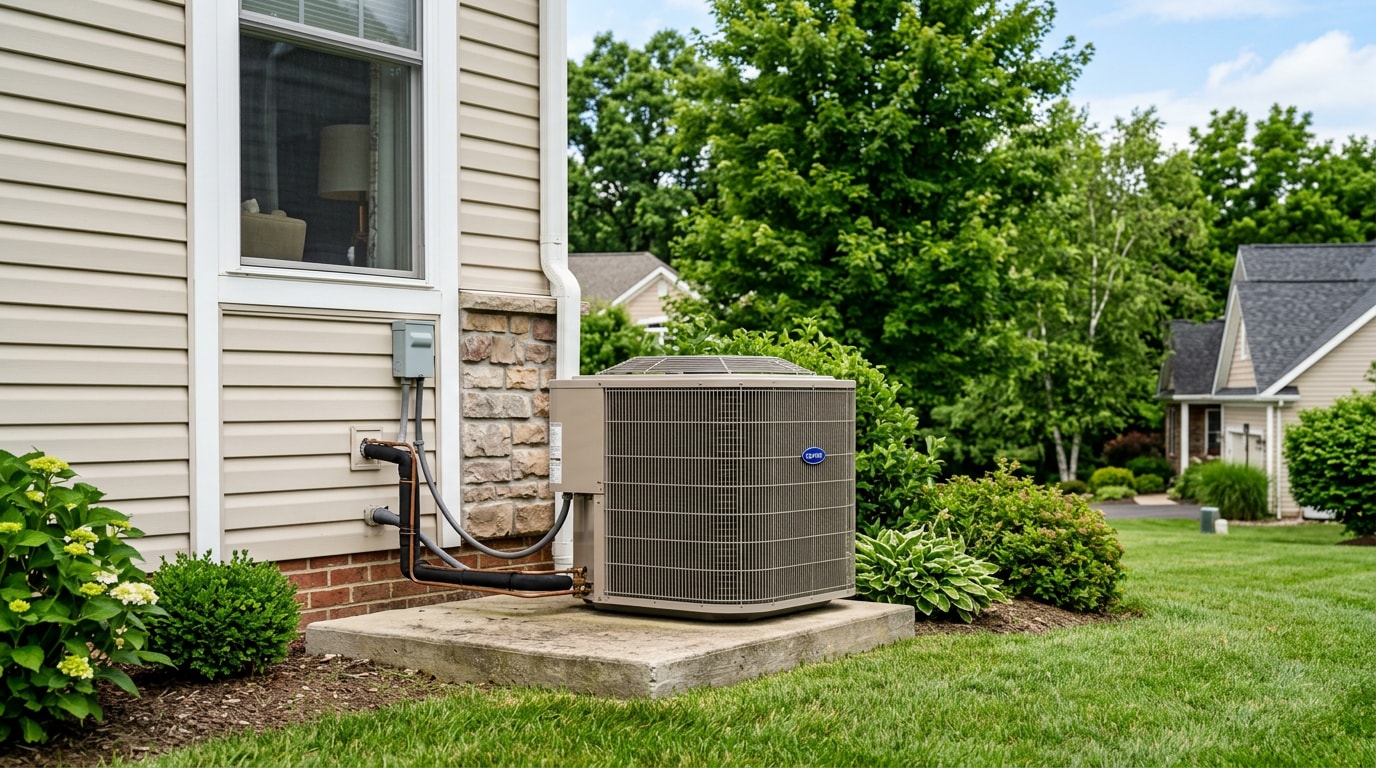
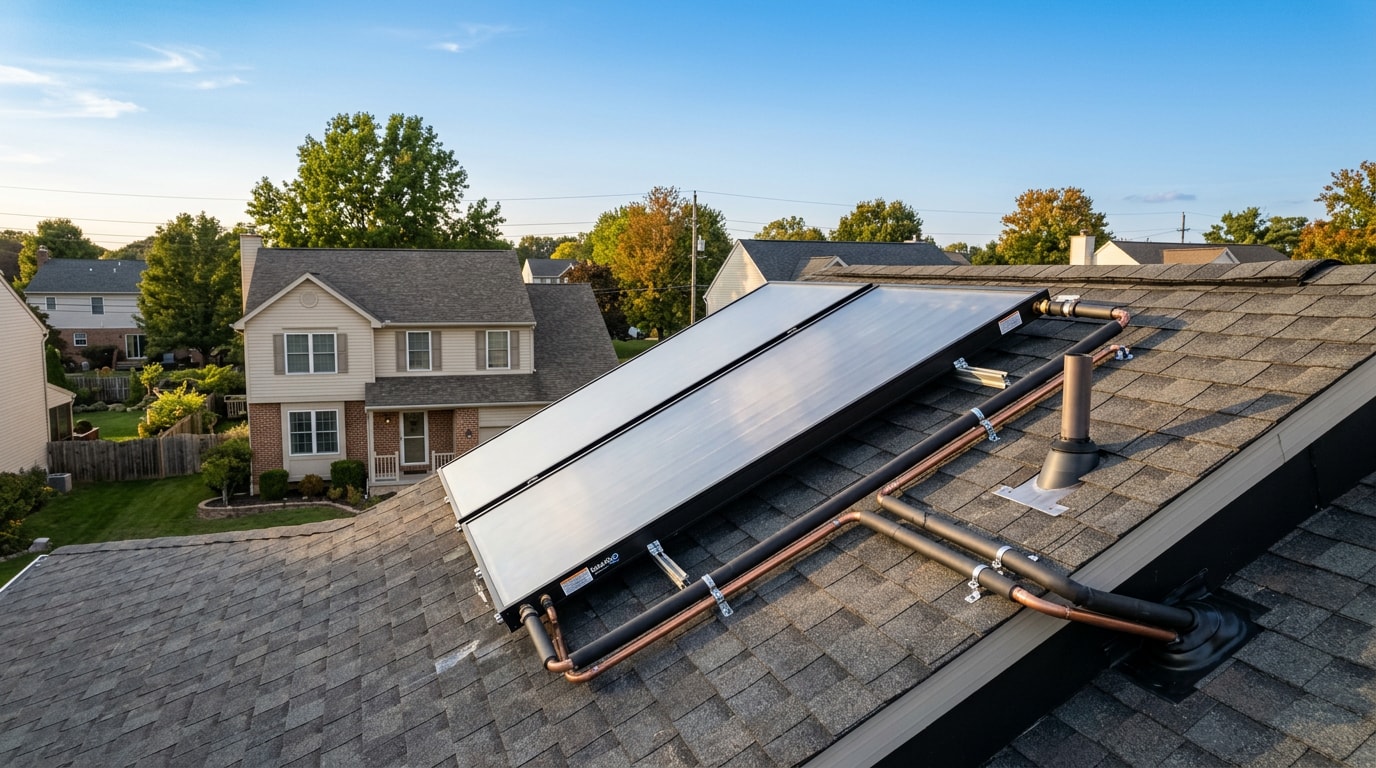
A solar water heating system in Malvern, PA uses rooftop collectors to capture sunlight and transfer that heat into your home's water supply, cutting the workload on your existing gas or electric heater. The payoff depends less on the collectors than on the plumbing behind them: correct sizing, freeze protection, and a code-compliant mixing valve separate a system that performs for 20 years from one that fails by its third Chester County winter. Here's what to know before you sign a contract, including what changed with federal incentives this year.
How a Solar Water Heating System Works
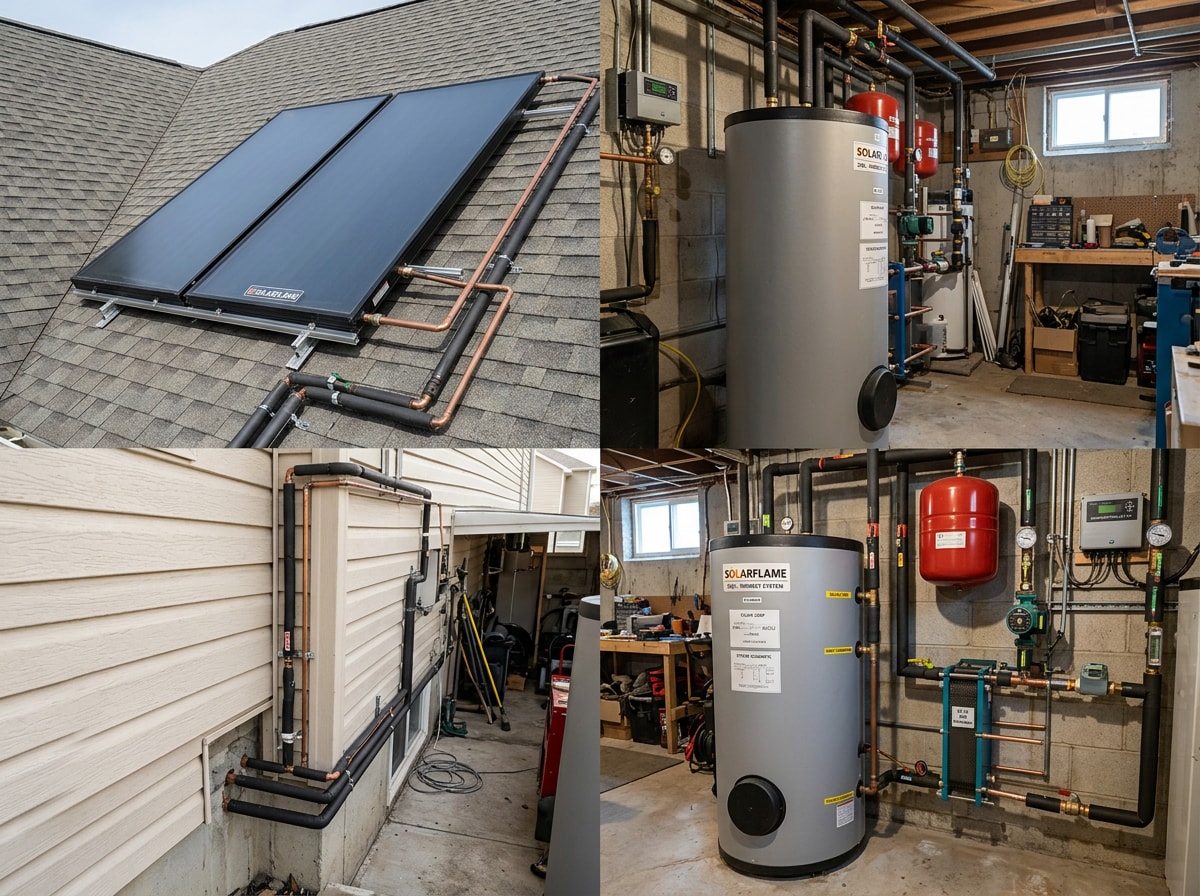
Solar water heating systems are composed of three main parts: the solar collector, insulated piping, and a hot water storage tank.
They collect the thermal energy of the sun and use it to heat water in homes and businesses, and the systems can be installed in any climate to reduce utility bills. It isn't a full replacement for your existing heater. It's a backup-paired system that lowers energy costs while a conventional unit handles cloudy days and overnight demand.
Homeowners across Chester County are increasingly pairing solar collectors with their existing setup rather than ripping out a working water heater. Understanding the two main system types helps you ask the right questions before you get a quote.
Active Solar Water Heating: Direct vs. Indirect Circulation
Solar water heating systems can either rely on electric pumps to circulate water, called active systems, or rely on thermodynamics, called passive systems, with active systems more common in residential use. Active systems split further into two designs:
- Direct circulation pumps household water straight through the rooftop collectors before sending it into the home. It works best in milder climates.
- Indirect circulation pumps a non-freezing heat transfer fluid through a closed loop and heat exchanger instead, so the household water never touches the collector directly.
Because Chester County winters routinely send overnight lows into the teens and 20s, indirect, closed-loop systems are the more practical local choice. Direct circulation collectors left unprotected can crack when temperatures drop below freezing overnight.
Passive Solar Water Heating: ICS and Thermosiphon Systems
Batch collectors, also called Integrated Collector-Storage (ICS) systems, heat water in dark tanks or tubes within an insulated box, storing water until drawn, and water can remain in the collector for long periods if household demand is low, making it very hot. Thermosiphon systems instead rely on natural convection: heated water rises out of the collector and into a storage tank mounted above it, no pump required.
Both are simpler and cheaper to install, but neither handles Pennsylvania's cold stretches as reliably as an active indirect system. Most local installers reserve passive setups for secondary applications, like a pool or outbuilding, rather than primary household hot water.
| System Type | How It Moves Water | Best Fit | Freeze Risk Locally |
|---|---|---|---|
| Active, direct circulation | Pumps household water through collectors | Mild climates | High |
| Active, indirect (closed-loop) | Pumps heat transfer fluid through a heat exchanger | Pennsylvania winters | Low |
| Passive, ICS/batch | Collector and storage combined on the roof | Secondary/supplemental loads | High |
| Passive, thermosiphon | Natural convection moves hot water to storage | Warm, coastal climates | High |
What a Solar Water Heater Costs in 2026 (And What Changed With Incentives)
Equipment and installation cost scales with collector type, roof work, and whether you're adding a dedicated solar storage tank or retrofitting an existing one. Indirect, closed-loop systems built for freeze protection generally cost more upfront than passive units, but they're the design most local installers actually stand behind for year-round Chester County use.
The incentive math changed heading into 2026. Under the Residential Clean Energy Credit (25D), the credit is not allowed for any expenditures made after December 31, 2025. That means a solar water heating system installed in Malvern this year no longer qualifies for the 30% federal tax credit that used to apply to solar thermal equipment. If you're pricing a project, build your return-on-investment math around energy savings alone rather than a federal rebate that's no longer available.
Pennsylvania's remaining state-level solar incentives, net metering and Solar Renewable Energy Credits (SRECs), are earned per kilowatt-hour of electricity a system generates. A solar water heater doesn't generate electricity, it produces heat directly, so those programs don't reach solar thermal equipment the way they do rooftop PV panels. Check with your utility for any water-heating-specific efficiency rebate before assuming a credit applies. A free inspection is the fastest way to get an accurate, written cost estimate for your specific roof and household demand.
Why Hire a Professional for Installation
Solar thermal plumbing involves pressurized fluid loops, heat exchangers, and code-mandated safety devices that go beyond standard water heater installation. A licensed installer understands how to size components correctly and keep the system compliant with local plumbing code.
On service calls across Chester and Delaware counties, undersized expansion tanks and missing tempering valves account for most of the solar water heater failures we're called out to fix, not collector damage itself. If you're vetting a contractor, ask about specific solar thermal experience, not just general plumbing credentials. Professional installation protects both your investment and your home. Review our HVAC contractor services or schedule a free inspection before committing to a quote.
Installation Standards That Separate a System That Lasts From One That Fails
Correct installation is where most DIY attempts and inexperienced installers go wrong. These four details matter more than the brand of collector on your roof.
Expansion Tank Sizing
As heat transfer fluid warms, it expands and raises closed-loop pressure. An undersized expansion tank forces the relief valve to discharge repeatedly, letting air into the loop and stalling circulation. Correct sizing accounts for the total fluid volume in both piping and collectors, not just the tank itself.
Piping Insulation and UV Protection
Pipe runs between the roof and basement need high-temperature insulation, typically EPDM or closed-cell foam rated for 250°F or higher, since standard insulation degrades under sustained solar heat. Any exterior-exposed insulation also needs UV-resistant jacketing, or sunlight breaks it down within a few seasons.
The Thermostatic Mixing Valve
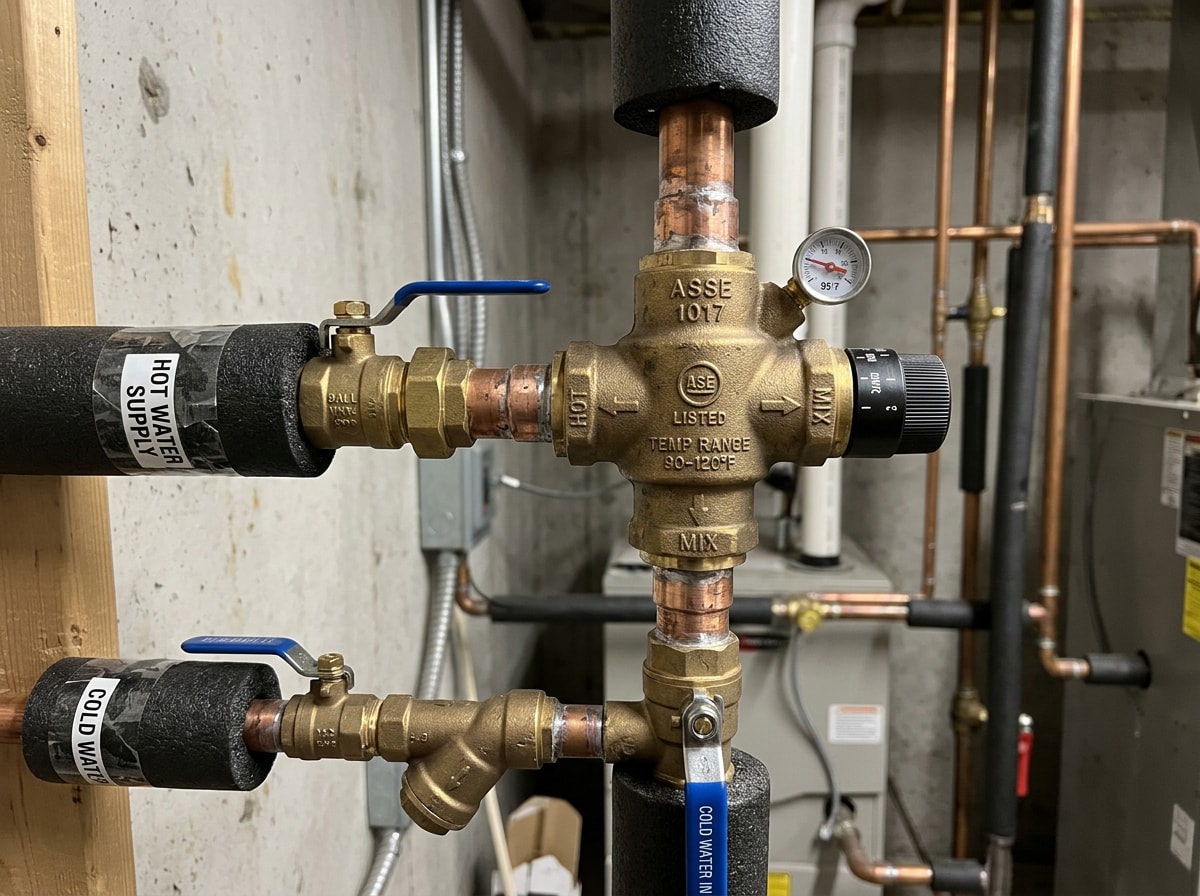
A tempering valve is your protection from scalding at the tap, mixing in cold water to decrease the water's temperature before it's delivered. That protection matters more with solar than with a standard heater, because collector water can run well above a safe delivery temperature on a sunny afternoon. Most adults will suffer third-degree burns if exposed to 150 degree water for two seconds, with burns also occurring from a six-second exposure to 140 degree water or a thirty-second exposure to 130 degree water, and even 120-degree water can cause third-degree burns after five minutes of exposure.
An ASSE 1017-certified mixing valve blends incoming cold water with solar-heated water to deliver a safe, consistent tempered output. A system without one sends scalding water directly to showers and sinks whenever solar gain is high that afternoon.
Relief Valves and Pressure Safety
Both the storage tank and the collector loop need their own temperature and pressure relief valve. This isn't optional equipment. Hissing or rapid discharge from a relief valve signals tank over-pressure and needs immediate attention, not a wait-and-see approach.
Keeping a Solar Water Heater Running: Maintenance and Repair
Skipping maintenance quietly erodes the energy savings that justified installing solar in the first place. A neglected pump or degraded heat transfer fluid can cut system efficiency long before it fails outright.
Routine maintenance typically covers fluid and glycol concentration checks, sensor accuracy, and pump function. Scheduling annual upkeep with a licensed heating system maintenance provider catches small problems before they become expensive ones, especially on the backup heater that carries the load on cloudy winter days. If that backup unit is due for a replacement, our heating system installation team can size it to work alongside your solar loop rather than against it.
Pairing a solar water heater with a well-tuned HVAC system rounds out a home's year-round energy plan. If you're also dialing in cooling settings for summer, see our Best Temperature for AC in Media, PA guide.
FAQ
What is a drainback system?
A drainback system uses gravity to empty collector water into a reservoir tank once the pump shuts off, offering freeze protection without antifreeze chemicals. It only works where roof pitch allows complete drainage back to the reservoir.
Can I retrofit my existing water heater for solar?
Retrofitting a standard tank is technically possible but usually inefficient, since most lack dedicated ports or an internal heat exchanger. A dedicated solar storage tank is the more reliable recommendation for most Chester County homes.
Does a solar water heater still work in winter in Pennsylvania?
Yes. Collectors absorb light, not ambient heat, so the system keeps working through a Malvern winter. Shorter days and a lower sun angle just mean the backup heater carries more of the load from December through February.
How long do solar water heaters last?
Most manufacturers and installers report collector lifespans of 20 to 25 years, while the storage tank, pump, and controls typically need service or replacement within 10 to 15 years, similar to a conventional tank. Regular maintenance is what keeps a system closer to the upper end of that range.
Is there still a federal tax credit for a solar water heater in 2026?
No. The Residential Clean Energy Credit is not allowed for any expenditures made after December 31, 2025. A solar water heating system installed in 2026 won't qualify for the 30% federal credit that applied to solar thermal equipment through last year. Check with your utility for any remaining local rebate before assuming a credit applies.
Is a solar water heating system worth it in Malvern, PA?
It depends on your household's hot water use, your roof's solar exposure, and whether the federal credit change affects your payback timeline. Without the expired federal credit, most homeowners should expect a longer payback period based on energy savings alone. Schedule a free inspection to get numbers specific to your home before deciding.
Ready to find out if a solar water heating system makes sense for your Malvern property? Schedule a free inspection with our team, or visit our homepage to see the full range of heating and cooling services we provide across Chester and Delaware County. You can also browse recent projects to see our installation work up close.